Voting should not depend on your ZIP code
An Arizona entrepreneur and community-development leader argues that mail-in voting and accessible polling places are how working parents, seniors, and tribal and rural voters actually get to participate.


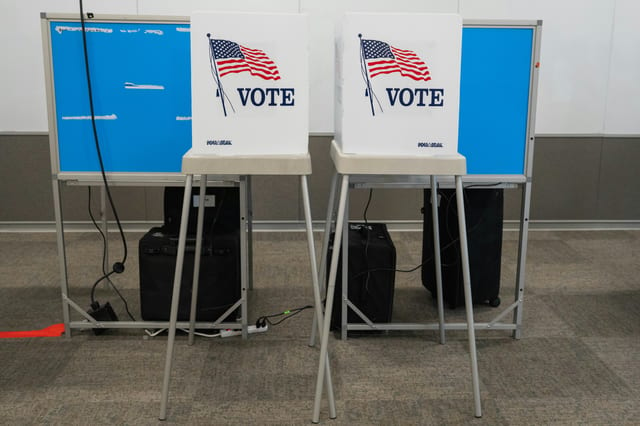
On a hot afternoon in South Phoenix last fall, I saw a woman, likely in her seventies, standing outside a polling place asking strangers if they knew where she was supposed to vote. Her location had changed. The notice mailed to her apartment never arrived. She kept apologizing, embarrassed, as if democracy were a test she had failed instead of a system that had failed her.
That moment has stayed with me because voting rights debates are often discussed in the abstract. Politicians argue over "election integrity" or "access," while regular people are just trying to figure out where to go, how long the line will be, and whether their ballot will count. For many Americans, voting is not a grand civic ritual. It is something squeezed between work shifts, child care, unreliable transportation, and exhaustion.
We like to tell ourselves that voting is simple because it is fundamental. But those are not the same thing.
That is one reason mail-in voting matters so much. For parents juggling two jobs, seniors with mobility issues, rural or tribal residents driving long distances, or people recovering from illness, voting by mail is not a political trick or a partisan advantage. It is a practical tool that allows more citizens to participate in the democratic process without unnecessary barriers.
Despite years of heated rhetoric, voter fraud in the United States is vanishingly rare. Studies from Brookings (2024) and the Brennan Center (2017), along with investigations by Republican and Democratic election officials, have found rates of less than 0.0025 percent. States that have used widespread mail-in voting for years, including Arizona, Oregon, and Utah, have developed systems to verify signatures, track ballots, and flag irregularities. No system is perfect, but the evidence shows that secure mail-in voting is both workable and reliable.
None of this means election security does not matter. It does. People should trust the outcome of elections, and states have a responsibility to maintain accurate voter rolls and clear rules. But too often, laws are written as though inconvenience is proof of seriousness. Long lines are treated like a sign of civic virtue. Confusing procedures are defended as safeguards. They are not. A democracy should not require obstacle courses to participate.
The people most affected by voting barriers are often the same people already carrying the heaviest burdens: working parents, elderly voters, tribal communities, students, and people living paycheck to paycheck. Missing two hours of work to stand in line may not matter to a salaried professional. It matters a great deal to someone choosing between voting and making rent.
We have solved harder problems in this country than helping people cast ballots. We track packages in real time. We renew licenses online. We deposit checks from our phones. Surely we can create voting systems that are secure, transparent, and accessible at the same time.
A healthy democracy is not measured by how difficult it is to vote. It is measured by how confidently ordinary people believe their voices matter once they do.
The woman outside that polling place eventually found the right location. A neighbor offered her a ride. She laughed about it afterward, relieved more than angry. But she should not have needed luck, kindness, and spare time just to participate in a right the Constitution already promises her.

About Kimber Lanning
Kimber Lanning is Founder and CEO of Local First Arizona, a statewide organization implementing innovative strategies for new models of economic development that create vibrant local economies. Lanning is an entrepreneur, business leader and community development specialist.
More from Kimber LanningSee it differently?
We welcome thoughtful commentary from contributors across Arizona.
Get Voices by email
New essays and invitations to upcoming conversations.