Eggs with a side of separation of powers
A Tucson restaurateur is challenging Arizona's cage-free egg mandate, and his case raises a question that reaches well past breakfast: who gets to make the law, unelected agencies or elected lawmakers?

Arizona Talks
Arizona’s civic arguments, essays, and commentary in one place.

New writing from people across business, government, culture, and community life.
Get the new essays first
Sign up for new essays and invitations to upcoming conversations.
Recent contributors: Don Henninger, Jon Riches, and Grady Gammage
Arizona Talks Voices is produced in partnership with the Arizona Local News Foundation.
Latest essays
A running publication of essays from across Arizona civic, cultural, and business life.
RSS FeedA Tucson restaurateur is challenging Arizona's cage-free egg mandate, and his case raises a question that reaches well past breakfast: who gets to make the law, unelected agencies or elected lawmakers?
Land-use and water attorneys Grady Gammage Jr. and Sean F. Krieg trace how Arizona's 1980 Groundwater Management Act tied the right to build to the right to water, and why that gate is straining under wildcat subdivisions, falling aquifers, and a shrinking Colorado River. The question was never whether Arizona grows, they write, but whether water gets priced honestly into the math.
Blake Sacha, president of Voter Choice Arizona, looks at a July primary where fewer than 27 percent of registered voters turned out and concludes the problem is structural. He makes the case for equal signature requirements, open primaries, and a top-five instant runoff.
Andrew Simek, district community manager for Congresswoman Yassamin Ansari, argues that voters who blamed government failure in 2024 diagnosed the wrong problem. After hundreds of community events and dozens of town halls, he writes, the pattern is capacity: constituents who qualify for help but cannot reach it. The real choice is not a big government or a small one, but one that can deliver.
Arizona state Senator John Kavanagh argues that U.S. immigration laws are both necessary and fair. His case rests on how those laws were made, through a democratic process, and on fairness to the immigrants who follow the rules and wait their turn.
On the country's 250th anniversary, Arizona Supreme Court Justice Clint Bolick argues that four constitutional principles hold tyranny back: due process, federalism, free speech, and separation of powers. They only do their job, he writes, when we defend them even against the side we agree with.
Short-term rentals get blamed for Arizona's high home prices. A Common Sense Institute economist walked through a decade of data and lands somewhere else: the squeeze comes from a fractured permitting system and millions of acres of undeveloped state land.
American cities stopped building up and started building out. Joe Pitts argues that the Sun Belt's suburban boom doesn't have to mean the end of great cities, and lays out what it would take for Phoenix to become the proving ground for a new kind of American city.
Rudy Cota III argues that ranked choice voting and jungle primaries are a seductive but false fix for Arizona's political frustration, and that the real work of better politics happens inside the parties, not by rewriting the rules of the ballot.
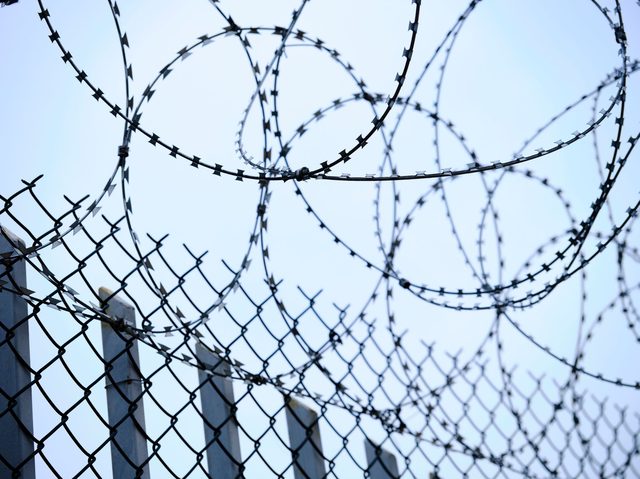
State Senator Analise Ortiz argues that the ICE detention facility planned for Surprise is being imposed on the city without the consent of its residents. Local leaders, she writes, have the legal tools and the responsibility to stop it.
After learning to disagree well through high school speech and debate, Nivea Krishnan and two fellow Arizona Talks leaders make the case for expanding an activity only 48 of the state's roughly 560 high schools can offer.
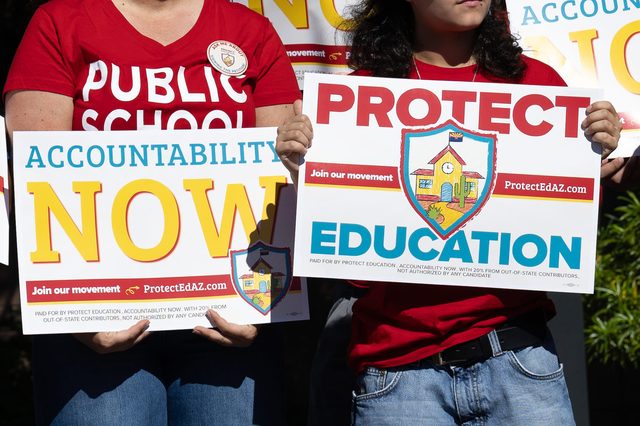
Leaders of Save Our Schools Arizona and the Arizona Education Association make the case that universal ESA vouchers are draining the public schools most families still choose—and lay out the ballot measure to rein them in.
An Arizona entrepreneur and community-development leader argues that mail-in voting and accessible polling places are how working parents, seniors, and tribal and rural voters actually get to participate.
A mother of three kids with dyslexia on what Arizona's ESA scholarship made possible, and why she's worried about the ballot measure that would change it.
Former state senator Steve Kaiser argues that the most powerful influence on a politician is an informed constituent. He walks through how voters can build real civic relationships with the people who represent them.
We welcome thoughtful commentary from contributors across Arizona.

Become a Contributor