When we make room for conversation
Maddison Hughes went to an Arizona Talks and KTAR News forum on the 2026 ballot propositions already sure of how she would vote. Hearing why other Arizonans saw the same measures differently still changed her mindset, she writes, because being informed doesn't mean you're done thinking.

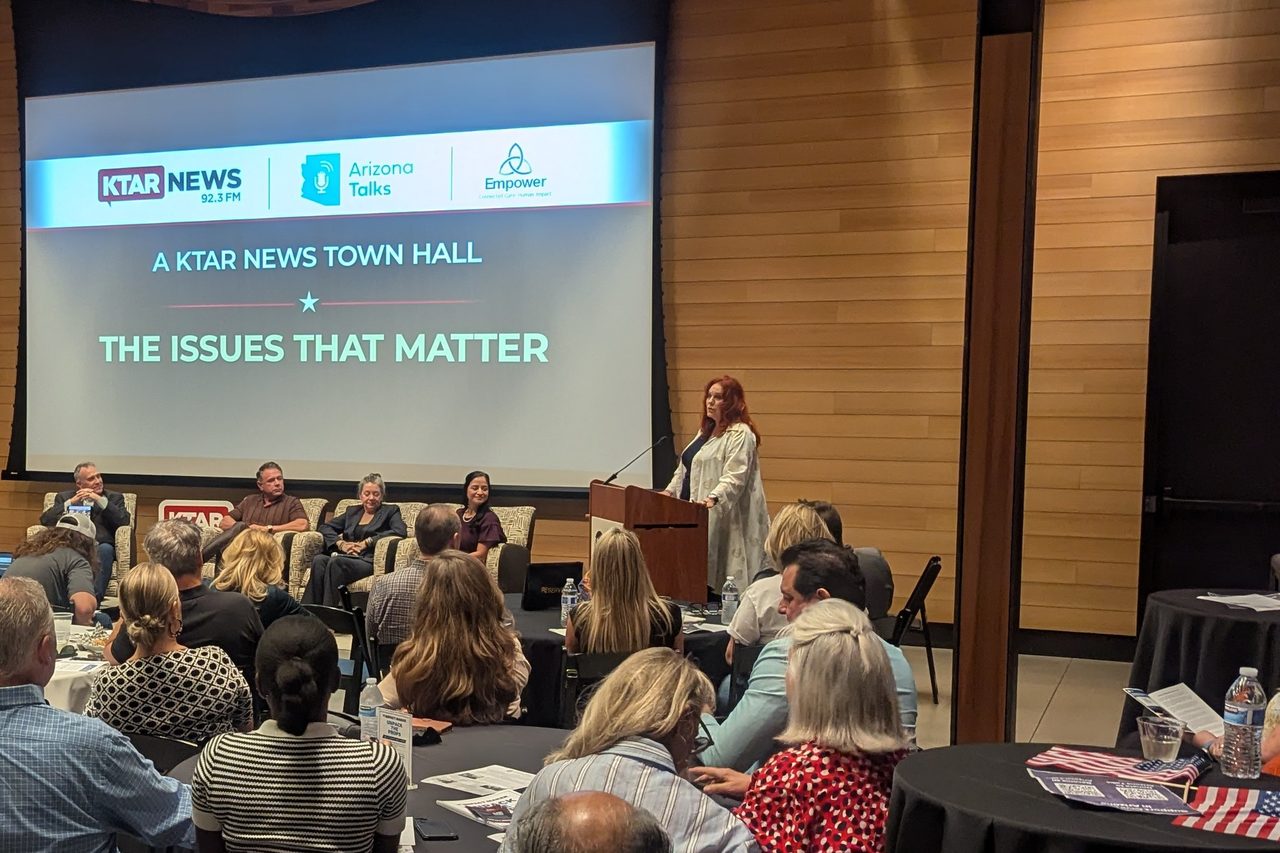
On September 15, Arizona Talks and KTAR News invited Arizonans from all backgrounds to Western Spirit: Scottsdale’s Museum of the West to experience a nonpartisan conversation about the eight propositions on this year’s ballot because of a shared belief that issues matter. While I wanted to attend for many reasons, not one of them was that I wanted more information or was undecided on my vote. I certainly did not expect it to give me much to think about. Writing this now, I am compelled to ask myself, “Then why did I even go?”
The answer is that I am suffering from a conflicted mix of political fatigue and interest. Based on conversations I had at the event and in my wider community, I am in good company. In recent years, it has felt like political division and vitriol have rapidly increased, and that may be true. But to me, the takeaway of the evening was that the issues aren’t more divisive than ever before. Civil discourse has broken down, and that breakdown has created anger, fear, and, maybe worst of all, apathy.
The panels were split into two themes: “Money, Schools, Culture” and “Elections, Democracy & Public Safety.” The panelists chosen for each brought together not only a thoughtful mix of party perspectives but also firsthand experiences that gave their opinions trust and credibility, whether or not the audience agreed with them.
While the evening did not change my mind, it did change my mindset. It was welcome reinforcement that being informed does not mean you are finished thinking. I could feel confident about my vote and still benefit from hearing how someone else approached the same issue: what they prioritized, what consequences they worried about, and what experiences shaped their view. I walked away recommitted to the philosophy that while issues matter, civil discourse cannot fall by the wayside.
That distinction, between the issues and how we talk about them, matters. Perhaps part of what has changed in recent political cycles is not necessarily the issues themselves, but our ability to discuss them without assuming the worst of one another. When disagreement becomes a contest to win, people stop asking questions. They retreat into familiar positions or disengage entirely, providing no benefit to a healthy democracy.
Practicing civil discourse (because it must be practiced) will not make every disagreement disappear, and it should not require anyone to pretend that the stakes are low. However, making room for conversation can help us see not only what someone believes but why. It can also make our own thinking more deliberate.
As we approach a general election in our nation’s 250th year, the moment invites reflection on the past, present, and future of our country. More specifically, it prompts us to consider how we approach the issues, and how our connections to one another have evolved and shaped who we are today and where we go next. It is my hope that civil discourse becomes embedded in our minds and our culture as we face the future together.

About Maddison Hughes
Maddison Hughes is the public policy and operations coordinator at First Place AZ, where she works in disability advocacy. Her work focuses on shaping public policy, advancing research, and increasing awareness, opportunities, and support for an often-overlooked community. She earned a bachelor’s degree in political science, with a focus on comparative politics, from the University of California, San Diego.
More from Maddison HughesSee it differently?
We welcome thoughtful commentary from contributors across Arizona.
Get Voices by email
New essays and invitations to upcoming conversations.